



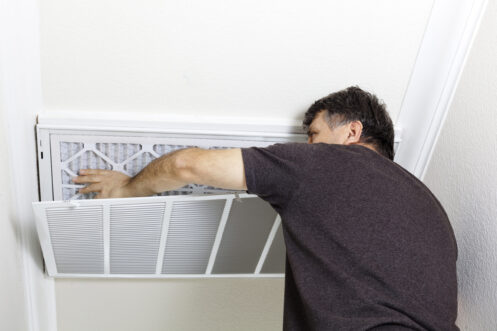
Changing the filter that is part of your HVAC system is very important for maintaining good airflow and clean, healthy air. It’s important you’re using the right type. There are many types of filters to choose from, some of which trap fine particulates while others focus more on blocking larger contaminants like dust and pet hair. Each filter type comes with different replacement guidelines, so it’s crucial to understand how each one works.
Pleated Filters
Pleated filters are the most common type of filter used for residential properties. They come in several types, including those made from polyester or cotton, and feature folded pleats that create more surface area for trapping particles. They do a good job at reducing pet dander, dust, and mold spores. Their balanced efficiency makes them a great fit for most Modesto homes because they don’t cause significant airflow restrictions. Your HVAC system will run smoothly, and you can enjoy better air quality without having to spend money on expensive HEPA filters. Pleated filters typically require replacement every 30 to 90 days.
Spun Glass Filters
To create spun glass filters, manufacturers weave strands of spun glass together and bond them into a flat panel. These are the most basic and cheapest types of filters for heating and cooling systems. They perform well at capturing large particles like lint and dust, but they won’t improve indoor air quality much. Their lack of density lets small allergens and pollutants pass through, so they offer little protection for those with respiratory issues. It’s usually not wise to use spun glass filters in Modesto, especially during wildfire season. You would need to change the filter very frequently to maintain a healthy level of indoor air quality.
Fiberglass Filters
Fiberglass filters are very similar to spun glass filters in that they use layered fiberglass to trap larger particles. However, thanks to their tighter weave and added binder materials, they do a better job of improving indoor air quality. Instead of letting small particles pass through, they create a better barrier to prevent them from circulating through your home. Still, due to the dry and dusty winds in the summer in Modesto, fiberglass filters may not be the best choice. They require replacement very frequently, and during wildfire season, they’re likely to not be effective enough.
UV Filters
UV filters are unique in that they use ultraviolet light to damage the cellular structure of bacteria, viruses, and mold spores. This technology is more expensive to use, but it provides the ultimate form of protection against biological contaminants. They are very helpful in homes where individuals with asthma or weakened immune systems reside. The UV light will help with disinfection, so you don’t constantly battle poor air quality and illness. A lot of homes in Modesto that experience indoor moisture problems use these filters to reduce mold growth.
Taking care of the UV bulbs entails wiping them down periodically and replacing them once every 12 months. Your system may also have a pre-filter used as part of this sanitizing system that needs replacement periodically.
Activated Carbon Filters
Activated carbon filters can absorb odors from smoke, pets, and cooking fumes. They also absorb volatile organic compounds from cleaning products, air fresheners, new building materials, and paints. If your goal is to reduce dust throughout the home, these filters are often paired with a more traditional form of filtration for this purpose. Their ability to neutralize odors and trap harmful gases makes them excellent for helping a home smell fresher and feel more comfortable. They are the ideal choice for homes near busy roads like McHenry Avenue or near industrial areas where fumes and pollutants are more common. Activated carbon filters typically require replacement once every three months. You can expect to replace them more often when wildfire smoke is heavy.
Electrostatic Filters
One benefit of electrostatic filters is that they use static electricity to attract and capture airborne particles. They come in both disposable and washable versions, making it simple to pick an option that fits your preferred maintenance routine and budget. Homeowners who want better allergen control without spending money on expensive HEPA filters often opt for electrostatic versions. They’re a smart pick for homes that are close to orchards or fields, where dust and pollen can get in through doors and windows. By capturing allergens before they circulate through your HVAC system, these filters help improve indoor air quality and reduce allergy symptoms. They require changing every 30 to 60 days for the disposable versions. Washable ones need cleaning monthly.
If you have an air filtration unit attached to your HVAC system that uses electrostatic technology to capture particulate matter, you may need to clean collection plates inside the unit. This eliminates the need to replace a filter every few months. Just make sure that you completely clean and dry the plates before you put them back into your unit. This will prevent the growth of mold while ensuring no damage occurs to the interior components of your HVAC system.
Washable Filters
With washable filters, you don’t have to worry about spending money every few months on a new filter. You simply take the filter out of the HVAC unit, wash it, and put it back. You must make sure you keep it regularly washed (approximately every 30 days), or it will lose its ability to trap particles effectively. Letting the filter dry before you reinstall it each time is vital to avoiding mold growth. If you don’t mind the extra time and effort, washable filters are one of the most cost-effective options available. Most versions of washable filters will last up to five years with regular cleaning before you will need to replace them.
Media Filters
Media filters are basically just larger versions of pleated filters. The main difference is that they offer a much thicker design, which allows for deeper filtration without restricting airflow. Cost-wise, these filters normally fall in the mid-to-high price range. They sit in a dedicated cabinet between the HVAC unit and the return duct. Their ability to capture tiny particles with a larger surface area means they last longer, improve air quality more effectively, and require less frequent replacement (every 6 to 12 months).
High-Efficiency Particulate Air Filters
While you cannot use a high-efficiency particulate air filter (HEPA) in a standard furnace because of airflow restriction, you can use it in an air filtration system. There are modifications and upgrades that we may be able to make to your residential HVAC system to allow for the use of a HEPA or upgraded filter.
Do you know which filter would be the best option to use in your house? We can check your home’s air quality needs and the HVAC system’s compatibility to help you choose the best type. Loves Air is your go-to provider for everything related to heating and cooling. It’s important that you’re always using the correct filter for your HVAC system. Otherwise, you run the risk of causing permanent damage. Learn about our Loves Family Plan that takes the stress out of heating and cooling maintenance. Call Loves Air now to access top-tier HVAC services in the Modesto, CA area.