



California’s Central Valley experiences long, oppressive summer heatwaves that can force your HVAC system to use more energy and fuel. If you’re thinking of upgrading or switching out your existing home comfort equipment for something new, you may wonder if switching to an all-electric HVAC system is the right choice.
At Loves Air, we’ve installed heat pumps throughout Modesto, Manteca, Ripon, Oakdale, Riverbank, Escalon, and surrounding communities. Every installation begins with a professional load calculation and a complete evaluation of your home’s ductwork and electrical system to ensure your new equipment performs as intended.
Key Takeaways:
- All-electric HVAC systems provide reliable, year-round heating and cooling without burning fossil fuels.
- Many Central Valley homeowners are switching to heat pumps due to rising natural gas costs, state and local utility incentives, and lower operating costs.
- Switching to an all-electric HVAC system saves money on energy costs while lowering your carbon footprint.
- Loves Air provides reliable installation of all-electric heat pumps for optimum performance and energy savings.
What Is an All-Electric HVAC System?
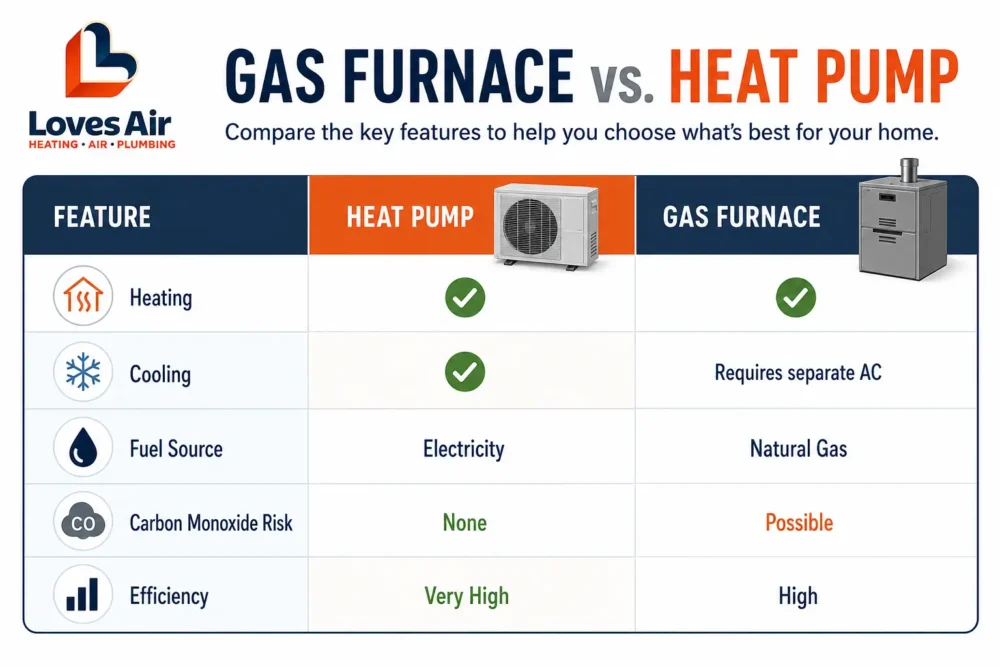
All-electric HVAC systems use electricity to power equipment that moves heat into your home during the winter and pulls heat out of your home during the Central Valley’s long, hot summers. These energy-efficient HVAC systems don’t use gas lines or oil tanks, so there’s no dangerous exhaust or risk of carbon monoxide leaks because there’s no fuel combustion.
All-electric systems move heat (transfer) instead of creating it, making them more efficient than standard fuel-burning home comfort equipment. Most all-electric systems run on home solar power or clean electrical grids, helping you lower your carbon footprint. You’ll enjoy heating and cooling in a single unit for seamless switching when the seasons change.
All-Electric HVAC Options
Our NATE-certified technicians install a variety of all-electric options for Modesto area homes. Before you decide which electric HVAC system is right for you, here are some of the most common examples that homeowners can install:
- Ductless mini-split: This compact equipment connects an outdoor unit to one or more small wall-mounted indoor units for independent temperature control without ductwork.
- Electric forced-air furnace: A forced-air furnace uses internal electrical resistance heating coils to warm the air, coupled with a standard electric air conditioner to cool your home.
- Variable refrigerant flow (VRF) systems: This advanced multi-zone equipment is best for larger or two-story homes and can heat and cool different rooms at the same time by moving heat around your space.
- Air-sourced heat pump system: Heat pumps use an outdoor compressor and an indoor air handler to move heat in or out of your home, depending on the season.
Loves Air highly recommends a heat pump if you want an eco-friendly way to keep your home comfortable year-round. These highly energy-efficient systems save you money on heating and cooling costs while helping to lower your carbon footprint.
Why Are Central Valley Homeowners Switching To Heat Pumps?
There are many reasons why Central Valley homeowners are replacing their current HVAC systems with heat pumps:
- Rising costs: The cost of natural gas is on the rise, and California’s utility rates are also rising as demand and utility system strain continue to increase.
- State and utility electrification incentives: Many incentives are available to homeowners who upgrade to an all-electric system, including the San Joaquin Valley Pilot Program, TECH Clean California, and more.
- New rules: By 2030, all new home heating and AC systems in California must be all-electric heat pumps, removing gas altogether.
- More savings: Today’s modern heat pumps are much more efficient than older models, and they typically cost less to run than a more traditional gas furnace and air conditioner setup.
What To Consider Before Switching
When it’s been over 100°F for a few days straight during a summer heatwave, your HVAC system has to work overtime and use more energy than normal. Because of our oppressive summer temperatures, many homeowners consider upgrading their current systems to help them save. Before you make the switch to an all-electric HVAC system for your Central Valley home, there are some important factors to consider:
- Your electrical panel capacity: Confirm that your current electrical panel has the spare breaker spots and adequate amperage required to handle an all-electric HVAC system.
- Your ductwork: Unless you’re installing a ductless mini-split, it’s important to carefully inspect your ductwork for blockages, leaks, or poor insulation to support optimum airflow and efficiency.
- Load calculation: A properly sized heat pump is critical. A system that’s too large or too small won’t operate efficiently or keep your home comfortable. The in-house trained HVAC technicians at Loves Air will perform a professional energy load calculation for your home’s unique size and layout to ensure you receive the right system.
- Operating costs: Compare your monthly heating and cooling rates based on your current local fuel source costs to get a clear estimate of how much money you’ll save when you switch.
Understanding Long-Term Cost Savings of Heat Pumps
Heat pumps provide you with long-term cost savings in many ways, including:
- Better efficiency: Since heat pumps move or transfer heat rather than generate it, they operate more efficiently than HVAC systems that use oil or natural gas.
- Heating and cooling together: A heat pump provides consistent, reliable heating and cooling for your home in a single unit for more affordable operation.
- Less upkeep: Heat pumps use fewer mechanical components, making routine preventative maintenance and repairs easier.
- Long lifespan: An air-source heat pump can last up to 15 years or longer with proper care, saving on system replacement costs.
When You Should Switch to Electric HVAC in Central Valley
Every home and every customer is different, but here’s when you should consider switching to an electric HVAC system for your home in Central Valley:
- Your current system is reaching the end of its lifespan, or you’re paying for frequent, recurring repairs.
- You want to get in compliance with California’s 2030 target to phase out all new gas heater sales.
- You’re undergoing a major home remodel or a new home addition and are already upgrading your electrical panel and/or opening walls.
- You want to future-proof your home now before you sell it.
- You’re looking for more ways to save on your energy bills.
Contact Loves Air To Put a Little Love in Your Home Today!
If you live in the Central Valley, we look forward to welcoming you to the Loves Air family. Our in-house trained technicians specialize in providing reliable new HVAC system installations and replacements. When you’re ready to switch to an all-electric HVAC system, find out why we’re the best in the 209 and why you’ll love us, guaranteed, by reaching out today.
Frequently Asked Questions
Are there rebates for switching to an all-electric HVAC system in California?
Yes! California offers several rebates for switching to all-electric HVAC systems with incentives from federal programs and local electric utilities. TECH Clean California also offers statewide incentives when you switch to an all-electric HVAC system.
How much does it cost to switch from gas to an all-electric HVAC system?
The cost to switch from gas to an all-electric system varies based on several factors. Running new electrical lines, upgrading your electrical panel, capping off and decommissioning your old gas line, and installing an air-source heat pump rather than a standard electric furnace will add to your total cost.
If I have a solar system in my home, should I switch to a heat pump?
If you already have a solar system in your home, switching to a heat pump is recommended. Making the switch lets you use your clean solar power for heating and cooling to help cut carbon pollution and lower your utility bills.
Will I Need a New Electrical Panel?
Not always. Some homes already have enough electrical capacity for an all-electric HVAC system, while others may require a panel upgrade or additional breaker space. During your estimate, Loves Air will inspect your electrical system and explain whether any upgrades are recommended.
Will My Electric Bill Increase?
Not necessarily. While a heat pump runs entirely on electricity, it is significantly more efficient than traditional electric resistance heating because it transfers heat instead of creating it. Many homeowners see lower overall heating and cooling costs, especially when replacing older HVAC systems. Homes with solar may save even more.