

As summer ends, your thoughts may turn to keeping your home warm during the autumn and winter. After sitting dormant all spring and summer, however, your furnace may not be up to the task. Use these tips to prepare your HVAC system for the upcoming fall with furnace maintenance tips in Salida, CA.
Change the Filters
Before autumn begins, change the filters. You should change them every two to three months to ensure optimal HVAC system performance. However, if you have long-haired pets inside your house, you may need to change them more often. Use high-quality filters that are the right size for your furnace.
Remove Objects in Front of the Vents
If you have floor or lower wall vents, remove any objects, such as boxes, furniture or totes, that block them. Blocked air vents prevent your heating system from blowing out air effectively. They also force your furnace to work harder to keep your home warm.
Vacuum the Registers and Vents
Likewise, vacuum the registers and vents in your home. Debris, such as dust, pet hair and dirt, forms clogs inside them. It also prevents warm air from flowing and circulating normally. Use a vacuum attachment with a brush or a broom to remove dust, dirt and other buildup on the vent and register covers.
Clean the Outdoor Unit
As fall approaches, inspect the outdoor unit of your home’s HVAC system. Remove debris like leaves, grass, spider webs and dirt on it. Keeping the outdoor unit clean enhances the efficiency of your heating system. It also helps extend the lifespan of the system’s equipment and lowers indoor humidity levels.
Inspect and Repair the Ductwork
Intact ductwork also helps maintain comfortable humidity levels inside your home. Openings like cracks and holes in the ducts let in elements like moisture and cold. They lower the temperature inside your home and also make it harder for your furnace to keep your home warm. Before fall begins, inspect the ductwork, reattach loose areas, seal cracks and holes and replace ductwork that you cannot repair.
Test the Power Switch
Test the power switch to your heating system to ensure your furnace will power on normally. If it fails to start within a few minutes of turning the switch to the on setting, the switch might have loose wiring or other damage. Hire one of our technicians to inspect and repair the power switch.
Test the Thermostat
Ensure the thermostat works as it should before winter arrives. Turn the thermostat to a higher temperature than the air temperature in your home. If it fails to reach the set temperature, the thermostat may need servicing.
Hire one of our technicians to test and recalibrate it, if needed. We can also repair or replace the thermostat.
Upgrade to a Smart Thermostat
If your thermostat is old or outdated, consider upgrading to a smart thermostat for your home. Smart thermostats are easy and convenient to use. They typically come with mobile apps that allow you to turn them on and off and adjust their settings remotely.
Program Your Thermostat for Efficiency
Program the thermostat in your furnace to maximize your system’s energy efficiency. The U.S. Department of Energy recommends setting your thermostat at 68 degrees Fahrenheit during the fall and winter.
Create a heating schedule that keeps your home at a lower temperature when you and your family are at school and work. Adjust the setting for a more comfortable temperature when you are home.
Seal Any Drafts
Inspect the areas around your doors and windows for drafts. These openings let in cold air and humidity during the fall and winter, lowering your heating system’s energy efficiency and raising your utility bills. Use materials like weatherstripping and caulk to seal drafts around your windows and doors.
Listen for Unusual Noises
When you test your heater before fall, listen for any unusual noises coming from it. Sounds like banging, squealing or grinding could indicate that your furnace has loose or damaged parts. Moving parts in the motor may also need lubricating. Routine tune-ups help your furnace operate more quietly.
Add Insulation
Add insulation to areas of your home like the attic and crawlspace. Poor insulation in these parts of your house allows heat to escape. It also lets in cold air and humidity.
Reverse Your Ceiling Fans’ Direction
As summer comes to an end, change the direction of your ceiling fans to run in a clockwise direction. This change of direction pulls up cool air while pushing down warm air. It also eases the burden on your furnace and enhances even heating throughout your house.
Check for Gas Odors
If you have a furnace that runs on natural gas or propane, check it for gas odors. Natural gas has no odor. However, many gas utility providers add chemicals that make it smell like rotten eggs.
Likewise, propane often has a rotten or skunk-like smell. If you notice your heater giving off sulfur or rotting odors, turn off the power to it. Then, hire one of our technicians at Loves Air immediately to inspect and repair any gas leaks in it.
Test Your CO and Smoke Detectors
The CO and smoke detectors in your home tell you how well your furnace operates. Test them before autumn to ensure they work normally. Replace the batteries in them at least once a year. Replace them every seven to 10 years.
Inspect the Heat Exchanger
A damaged heat exchanger increases the risk of CO leaks inside your home. It transfers heat to the air in your home through the combustion process in the furnace. Hire one of our HVAC technicians to inspect it every year to ensure it is not cracked or showing other signs of damage.
Check the Condensate Drain Line
Check the condensate drain line in the furnace. Debris, such as dirt and dust, can clog this line, preventing condensation from draining out of the furnace.
Instead, the condensation backs up, creating a water leak. Backed-up water also increases the risk of fungal growth inside your home. Eventually, this problem can corrode internal components, increase the risk of water freezing in the pipes and shorten your HVAC system’s lifespan.
Inspect the Pilot Light
The pilot light in your heater should burn a blue flame. If the flame is orange or yellow, it could mean your system has a gas leak, a clogged or contaminated gas line or a dirty burner.
Schedule Professional Maintenance
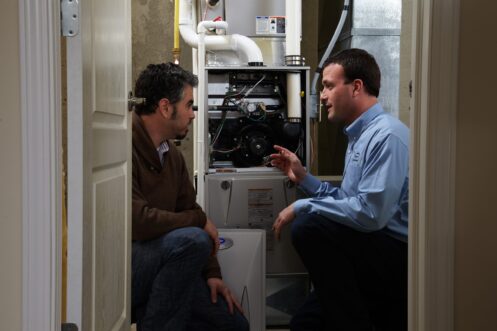
Schedule seasonal professional HVAC maintenance with a heating service expert. This service identifies potential problems that need immediate attention, such as a clogged gas line or damaged fan blades. It helps your system perform better, consistently heat your home and last longer. It can also lower the number of costly repairs your furnace may need.
Professional HVAC Maintenance in Salida
At Loves Air, we have 16 years of experience maintaining HVAC systems in homes and businesses throughout the Salida area. As our customer, you receive a 100% satisfaction guarantee on our work. Our NATE-certified team of technicians provides products and services from major brands like Ruud and Bosch. We also have an A+ rating and accreditation from the Better Business Bureau.
Contact Loves Air for your home’s fall HVAC maintenance.