


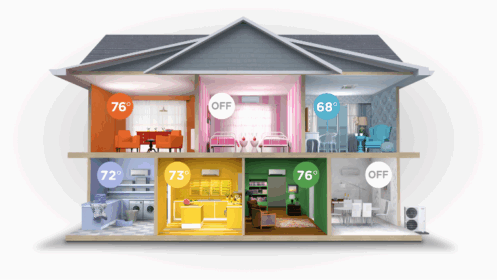
Splitting your HVAC setup into separate zones is all about getting better efficiency and comfort in your home. Before jumping into a zoning effort, you will want to get a handle on what the project may accomplish, how it actually works, and what the available options are.
Improving Efficiency
Energy efficiency gets a major boost from HVAC zoning. The real advantage comes from directing climate-controlled air exactly where it’s needed. Take a typical house where one side bakes in the summer sun while the other stays relatively cool. With just two zones, you can treat the sunny side as one area and the shaded side as another. This delivers targeted cooling without waiting for air to drift from room to room.
Low-use areas present another opportunity for zoning to cut energy waste. Guest bedrooms, home theaters, craft rooms, workshops, home offices, and similar spaces sit empty much of the time. However, traditional systems heat and cool them every cycle. Smart HVAC zoning lets you bring these rooms to appropriate comfort levels quickly when needed. However, you can dial back the climate control when they’re vacant.
Variable-speed technology makes zoned systems even more effective. Blowers and fans with variable speeds can maintain different airflow rates for different zones, so your living room can stay a bit warmer in winter while other areas remain cooler. Smart controls can also time when these systems ramp up. Your master bedroom zone might need increased output before bedtime to ensure better sleep, for example.
Properly set up residential zoning typically cuts utility bills by 20 to 40%. Houses with challenging areas like drafty upstairs rooms could see even bigger savings. In addition to being able to maximize HVAC efficiency, the reduced strain on equipment will add to your HVAC system’s lifespan, too.
Comfort Tailored to You
Temperature swings of five degrees or more between rooms appear in many homes. When your HVAC treats everything as one big zone, getting comfortable in any specific space without upsetting another room is tough. A basic upstairs-downstairs zoning setup can solve this by letting you dial in cooler conditions where you need them most. Especially if your upstairs roasts during the summer heat, this type of zone is a difference-maker.
Within individual zones, temperature variations drop dramatically. A variation of just one to two degrees is common in distant spots with a zoned HVAC and a smart thermostat. This tight control means you can hit your exact comfort preferences. Some households take this further with multiple zones, giving everyone their own climate control for bedrooms and other personal spaces. Particularly if someone in your house has health needs that benefit from better HVAC, this is a big benefit.
Smart thermostats with occupancy sensors push zoning even further by responding to real-time demands. Picture hosting a summer dinner party while also cooking. Guests keep arriving. The sensors detect the extra heat and people. The smart systems automatically boost cooling for your kitchen and dining zones. No more sweating over a hot stove while entertaining guests.
Improving Indoor Air Quality
Consistent airflow throughout your home creates noticeably cleaner indoor air, and zoning delivers controlled airflow. Airborne particles drop by roughly 15% with proper zoning alongside air quality solutions. Likewise, humidity stays much more controlled, often varying by just 5% room to room within the same zone.
Targeted filtration becomes possible when you zone strategically, too. A family member dealing with respiratory problems could get their own zone equipped with HEPA filtration, giving them cleaner air exactly where they spend the most time. Additional options include humidification, dehumidification, and germicidal UV light treatment.
Air balance stabilization is another appealing solution. Without air constantly shifting between rooms due to pressure differences, you get less dust migration and humidity movement. This creates an environment where mold and other irritants struggle to take hold, preventing the sick house syndrome that plagues many homes. If you have a whole-house humidifier, it can also ensure greater consistency of comfort between rooms.
Smarter Technologies
Smart technology integration is where zoning shines. When you pair zoning with smart HVAC components, the results are impressive. Motorized dampers, fans, and blowers control each zone. This gives smart thermostats command over airflow during heating and cooling cycles. Done right, this sort of setup can hold temperature swings across your entire house to less than a degree.
Real-time sensing packages elevate smart HVAC further. Occupancy detection lets the system automatically reduce conditioning in empty areas, while predictive controls and machine learning identify daily consumption patterns. The system learns when you typically use each room, then preemptively delivers comfort. For example, the system can learn to warm the kitchen before you start your morning routine.
Performance monitoring adds another smart solution. When zone efficiency starts declining, smart systems flag potential component failures before they become major problems. Predictive maintenance lets you get on issues proactively instead of dealing with emergency HVAC repairs after they get out of control and become expensive.
System Lifespan
Combining smart controls, zones, and variable-speed equipment dramatically cuts HVAC wear and tear. Instead of massive energy spikes that harm equipment, your system delivers steady airflow to each zone while running at lower capacity for extended periods. This approach eliminates the brutal stop-start cycles that typically kill HVACs early.
Zoned systems with variable-speed technology extend equipment lifespan by 25 to 40% compared to standard installations. The financial impact becomes clear over time. While a typical HVAC might need replacement after 12 to 15 years, properly zoned systems with smart technologies often run reliably for 20 years or more. Compressors, blower motors, and heat exchangers all benefit from the steadier operating conditions that zoning provides.
Maintenance costs drop, too. Fewer emergency repairs mean more predictable expenses, and components last longer between scheduled replacements. Many homeowners find that their annual HVAC service costs decrease by 20 to 30% once they install zoning.
Paying Back Your Investment
Zoned systems deliver solid financial returns through improved efficiency and extended equipment life, typically paying for themselves within three to seven years. Monthly utility savings compound over time. A typical 30% reduction in heating and cooling costs adds up to thousands annually in some households. Meanwhile, you are avoiding premature equipment replacement costs that can run into the tens of thousands in severe cases.
Installation costs vary significantly based on home size and complexity. However, federal and state tax credits alongside utility rebates often offset 10 to 30% of upfront costs.
Smart zoning offers the fastest payback period. A cost-effective smart thermostat may pay for itself in less than two years. It’s also crucial that zoned systems are installed correctly. They’re extremely complex, and an HVAC company that doesn’t set them up properly won’t be able to deliver on the benefits of a zoned system.
You can trust the experts at Loves Air to get it right. We’re a full-service AC and heating service for folks in Modesto, CA and nearby areas. Explore our specials page to find many ways to save on heating, cooling, and indoor air quality projects.
We stand by our work with a 100% satisfaction guarantee. You can also depend on us because we employ NATE-certified HVAC technicians and have an A+ rating with the BBB. Nextdoor has consistently named us a Neighborhood Fave, too. Our business is also a state-licensed contractor.
If you think your Modesto residence will benefit from HVAC zoning, schedule an appointment with a knowledgeable technician from Loves Air today.